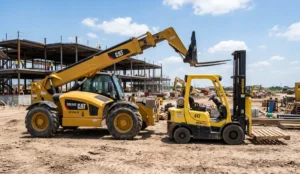

Renting the wrong size excavator is one of the more common and costly mistakes on job sites. Go too small and the machine struggles with material it was not designed to handle, and your timeline doubles. Go too big and you are paying for capacity you cannot use, while the larger footprint creates access and maneuverability problems that slow things down anyway. Here is how to match excavator size to your project before you book.
AOS Rental carries a range of excavator options for South Texas projects. See our full construction equipment lineup to browse available machines and specifications.
The Main Excavator Size Categories and What They Handle
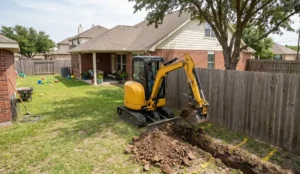
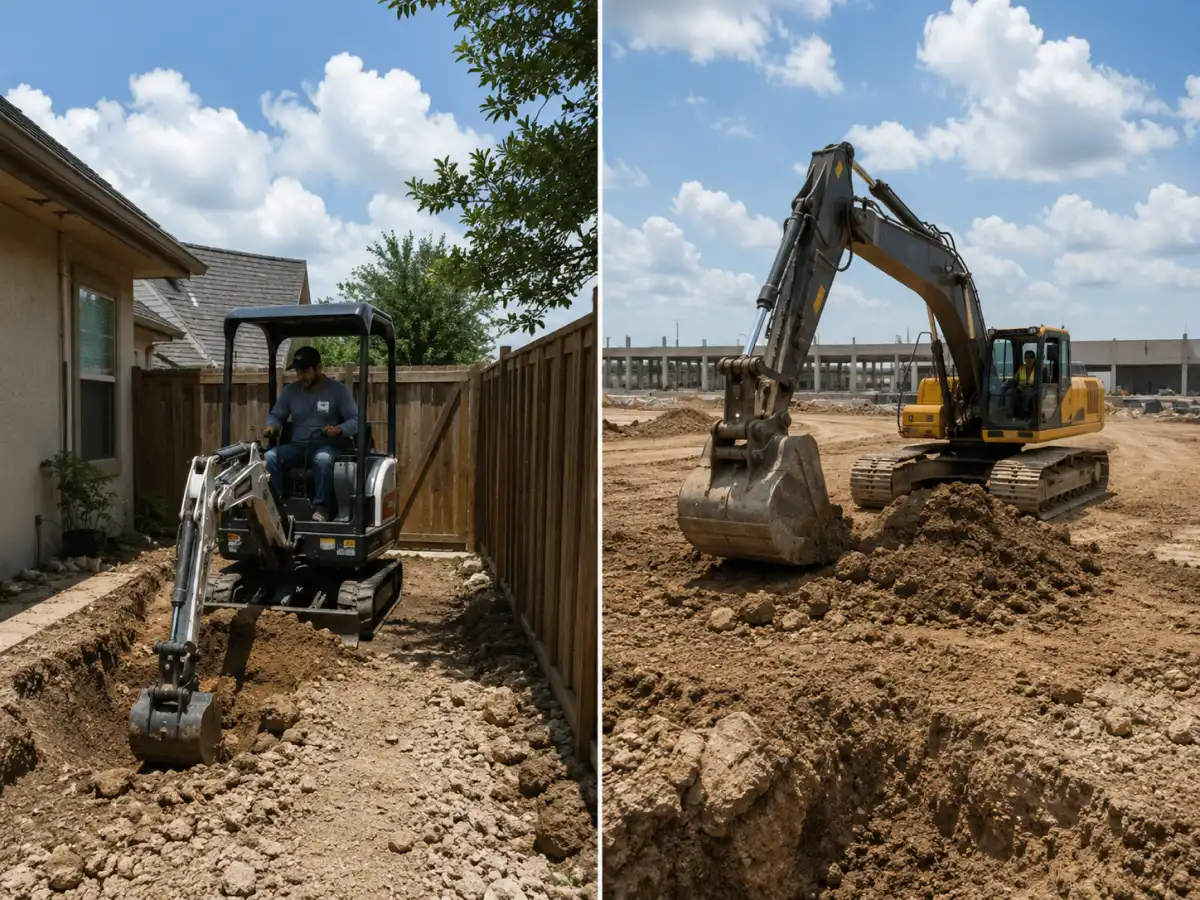
Mini excavators, typically under 6 tons, are built for tight spaces and light to medium digging. Residential utility work, landscaping, small trenching projects for drainage or irrigation, and any job in a fenced yard or near existing structures where access is limited. Their small footprint and zero or minimal tail swing make them the right tool for confined areas. Dig depth typically ranges from 8-12 feet depending on model.
Mid-size excavators in the 6-15 ton range handle a wider variety of commercial and light industrial work. Foundation digging for residential construction, larger utility trenching, site preparation on medium-scale projects, and drainage work requiring more reach and dig depth than a mini can provide. Better production rate than minis, still manageable in semi-constrained sites.
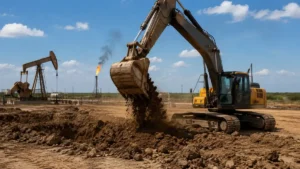
Large excavators above 15 tons are production machines: road construction, large site clearing, heavy infrastructure work, and oilfield applications where you are moving significant material per hour in sustained cycles. Footprint and access requirements are substantial. You need adequate site staging and haul road capacity to use them effectively.
How to Match Excavator Size to Your Specific Project
Dig depth is the primary technical factor. Know your required depth and confirm the machine’s rated dig depth covers it with margin. A machine rated for 12 feet working consistently at 11 feet is under strain. Give yourself a foot or two of buffer for machine longevity and safe operation.
Access determines the maximum machine size you can practically use. If your site has a 10-foot gate, a machine with a 9-foot transport width has zero margin and likely will not fit once you add blade and attachment widths. Measure everything: gate width, doorway clearances, overhead utility lines, and any tight turns on your access route.
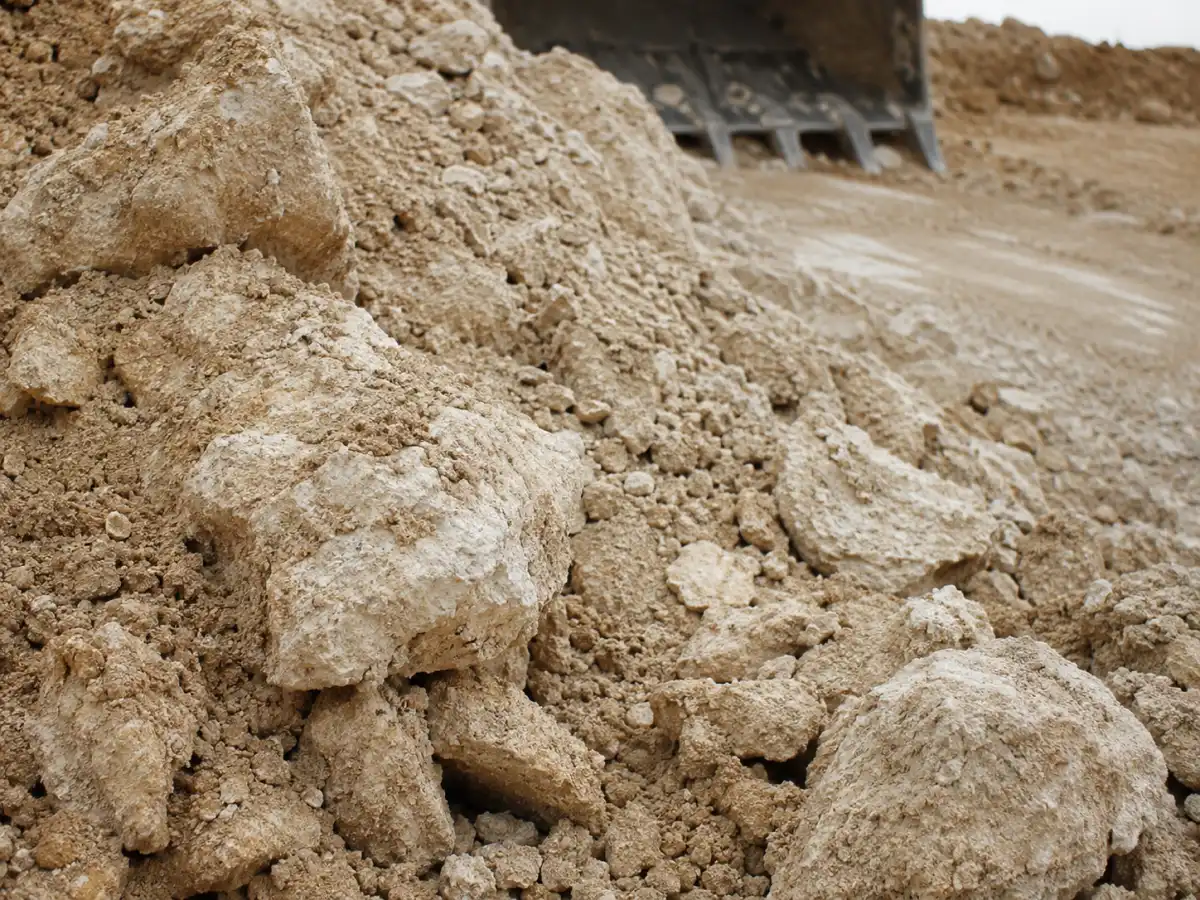
Material type affects size requirements more than people expect. Soft sandy soil is a very different situation from hard caliche or heavy clay. South Texas caliche in particular is dense and tough. Sizing up from what you would rent for sandy coastal soil is often the right call. Machines that are too small for the material work harder, wear faster, and move less per hour than the job requires.
Production rate requirements matter when your timeline is tight. A machine that can technically complete your job in three weeks is not useful when you have five days. Calculate your required daily production volume and confirm the machine can meet it.
If your project also involves oilfield work, view our oilfield equipment inventory to see what we carry for South Texas E&P applications.
Common Mistakes When Choosing an Excavator for Rental
Underestimating the site. Residential backyards often look more spacious than they are once you factor in overhead power lines, fencing, existing landscaping, and underground utilities that limit where you can swing the boom. A site walk before you call for a machine saves a lot of problems.
Not accounting for production rate. The smallest machine that can technically do the job is not always the right choice when timeline is a constraint. Underpowering a job creates its own cost in labor hours and rental days.
Forgetting transport requirements. Larger machines require a lowboy trailer and appropriate truck. If you are handling your own transport, confirm the equipment you need before booking the rental. Discovering you need a different trailer after the machine is on your site creates real delays.
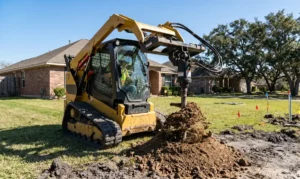
Skipping the attachment conversation. Hydraulic breakers, auger attachments, and specialty buckets change what a machine can do, and sometimes let a smaller machine handle work that would otherwise require a larger unit. Ask about available attachments when you call.
Renting an Excavator from AOS Rental in South Texas
AOS Rental’s team can walk you through the right excavator specification before you commit to a rental. Site conditions, access constraints, dig depth, material type, and timeline all factor into the recommendation. Getting the selection right before delivery is the fastest and cheapest way to run a successful job.
Learn more about our services and what we offer on our services page, or contact AOS Rental to discuss your project and get the right machine matched to your job before the first delivery.