



A skid steer without attachments is useful. A skid steer with the right attachment is a completely different machine. That’s the part most people don’t fully appreciate until they’re standing on a jobsite with a bucket when they needed an auger, or vice versa. If you’re new to the machine itself, here’s a quick overview of what a skid steer is and how it works. The machine is the platform. The attachment is what does the work.
Here’s a rundown of the most common skid steer attachments, what each one does, and how to figure out which one your project needs.
Why Skid Steer Attachments Matter
Most skid steer rentals come standard with a general-purpose bucket. For a lot of jobs, that’s all you need. But if your project involves digging specific holes, clearing brush, moving irregular material, or trenching, there’s almost certainly an attachment that cuts your time in half.
Knowing what’s available before you start means a better conversation with your rental company and a more accurate plan for the day. Showing up with the wrong tool costs time and sometimes a second trip.
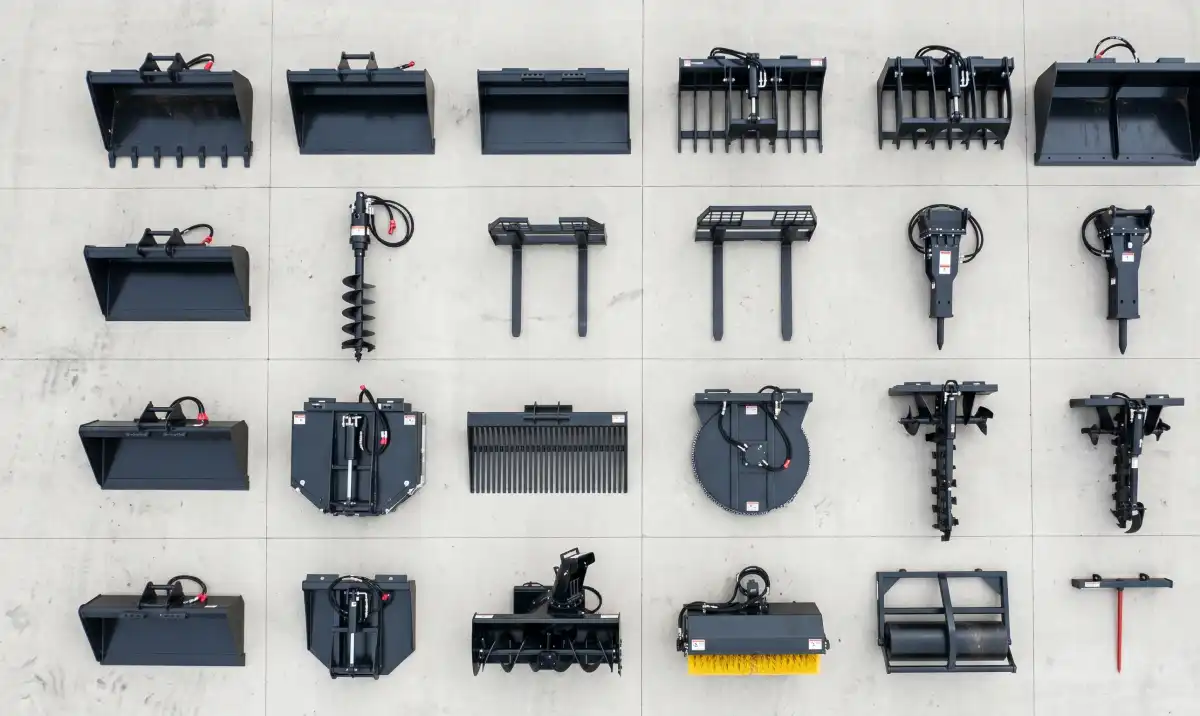
The Most Common Skid Steer Attachments
General Purpose Bucket
The standard bucket handles dirt, gravel, sand, demolition debris, and most loose materials. Bucket capacity varies from around 0.3 cubic yards on smaller skid steers to 1 cubic yard or more on larger machines. If your job is moving material from one place to another, grading a yard, clearing debris, or backfilling a trench, start with the bucket. It’s the right tool for more jobs than any other attachment on this list.
Auger
An auger attachment drills holes. A large helical bit spins into the ground, pulling soil up as it goes. Augers are standard for fence post installation, deck footings, tree planting, and utility pole work. Bit diameters typically run from 6 inches to 36 inches. When you call to rent, specify the diameter and depth you need. Not all bits fit all auger drives, and matching them correctly matters.
Grapple Bucket
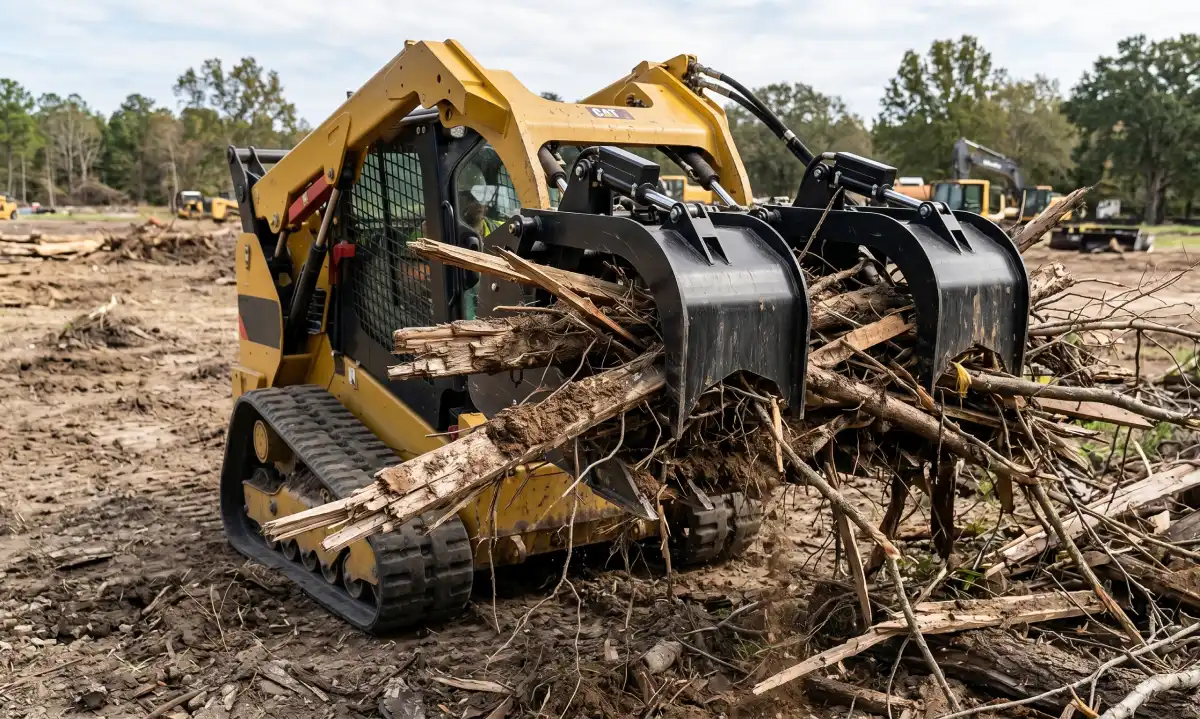
A grapple bucket has a hinged claw that closes over material, letting you grab and hold irregular loads that would roll right off a standard bucket. Brush, logs, demolition rubble, large rocks, and storm debris all move far more efficiently with a grapple. If you’re doing land clearing or storm cleanup, this is the attachment to ask about.
Brush Cutter
A brush cutter handles overgrowth, small trees, and dense vegetation. Some models are disc-style, others use rotating flails, but all of them clear land much faster than cutting by hand or running a standard bucket through thick growth. They’re the right tool for clearing a wooded lot, reclaiming overgrown land, or maintaining fence lines. These attachments require adequate hydraulic flow from the skid steer, so confirm compatibility with your rental company before booking.
Trencher Attachment
A trencher attachment digs a narrow, clean channel and deposits soil to the side. It works for irrigation lines, electrical conduit, drainage pipe, and utility work. If you want to understand what trenching actually involves before you start, this overview of trenching covers the basics. For short runs of 50 to 100 feet, combining trencher and bucket work on one skid steer saves a second rental. For longer runs, a dedicated trencher is the faster option.
Pallet Forks
Drop the bucket, add forks, and your skid steer moves palletized materials around a jobsite. Pallet forks on a skid steer aren’t as efficient as a dedicated forklift on level ground, but on a rough construction site where surfaces aren’t even, a skid steer with forks handles loads a warehouse forklift can’t get close to.
How to Pick the Right Skid Steer Attachment
Start with the primary task. What does the job actually need done? Dig holes, clear brush, move irregular material, trench a line? That answer usually points directly to one attachment.
Then check two things: soil conditions and machine compatibility. Augers struggle in rocky ground without the right bit configuration. Brush cutters need enough hydraulic flow from the skid steer to run properly. Always tell your rental company the conditions you’re working in.
If you’re still figuring out your budget for the project, here’s a breakdown of what it costs to rent a skid steer in the current market, including how attachments factor into the total.
When a Skid Steer Isn’t the Right Machine
Some jobs need a different piece of equipment altogether. Deep excavation over a large area calls for a dedicated excavator. Heavy lift work over distance calls for a telehandler. If the attachment task is the majority of the project rather than one part of it, renting the dedicated machine is often faster and more cost-effective.
A trencher attachment works well for 100 feet of conduit work. For 600 feet, a dedicated ride-on trencher finishes the job in a fraction of the time. A conversation with your rental company before you book usually surfaces this kind of option.
Skid Steer Rental in Victoria, TX
AOS Rental carries skid steers and a range of attachments for rent. Tell us what you’re working on and we’ll recommend the right machine and attachment combination for your project. Call us before your start date and we’ll make sure you have the right tool ready when you need it.
Frequently Asked Questions
What attachments can a skid steer use?
Common skid steer attachments include general purpose buckets, augers, grapple buckets, brush cutters, trencher attachments, and pallet forks. Many other specialty attachments are available depending on the make and model of the machine.
Do skid steer attachments come with the rental?
Most skid steer rentals include a standard general-purpose bucket. Additional attachments like augers, grapples, and trenchers are typically available as separate rental add-ons. Ask your rental company what attachments they carry when you call.
What skid steer attachment is best for land clearing?
For land clearing, a grapple bucket handles logs, brush, and debris efficiently. A brush cutter works best for overgrowth, thick vegetation, and small trees. For heavier wooded lots, a combination of both is often the fastest approach.