


Some jobs are out of reach. Not just figuratively. If you need a worker and their tools 40 feet in the air, a ladder isn’t a real option, and a scaffold takes half a day to set up. A boom lift gets you there in minutes, with a stable platform and both hands free to work.
Here’s what you need to know about boom lifts before you rent one.
How a Boom Lift Works
A boom lift is a type of aerial work platform that uses a hydraulic arm to raise a platform to height. Unlike a scissor lift, which only travels straight up, a boom lift extends outward and over obstacles. That horizontal reach is what makes it useful for jobs where you can’t park the machine directly beneath the work.
Most outdoor boom lifts run on diesel or dual fuel. Electric models handle indoor work where exhaust is a concern. Platform capacity is typically 500 to 1,000 pounds, which covers one or two workers plus their tools and materials.
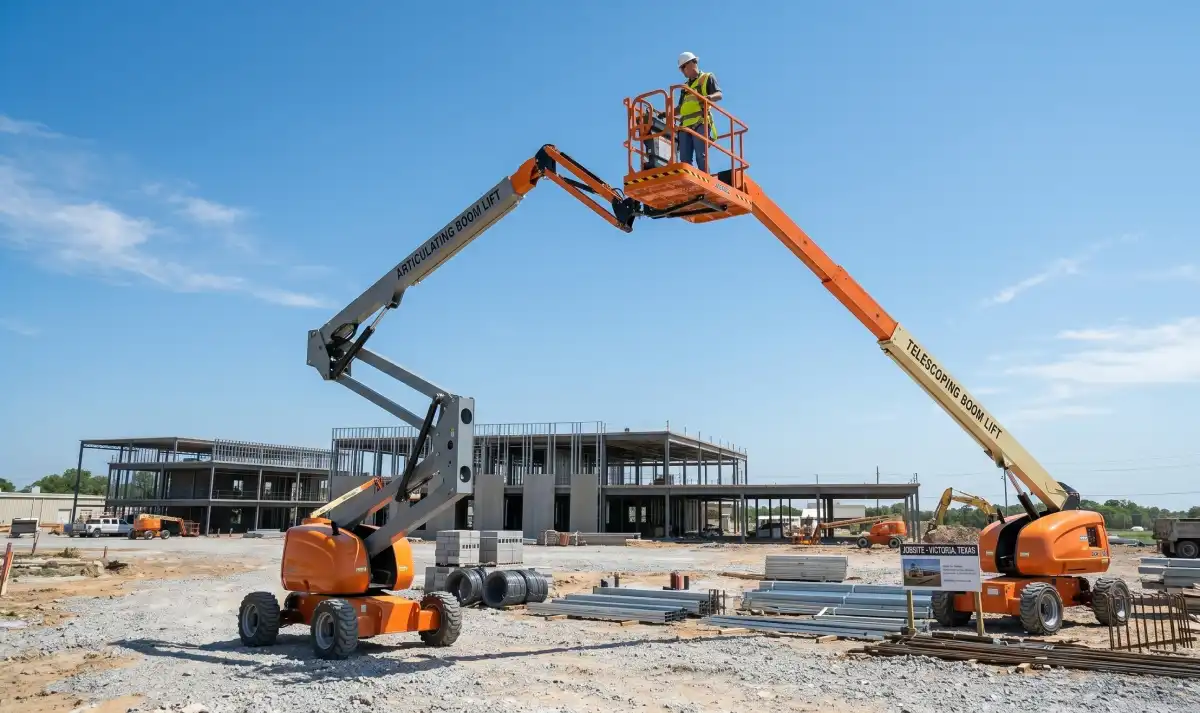
Articulating vs. Telescoping: Two Types, Different Jobs
There are two main boom lift configurations, and picking the wrong one will cost you time on the job.
Telescoping Boom Lifts
A telescoping boom lift, sometimes called a straight boom or stick boom, extends in a straight line. This gives you maximum horizontal reach and height. Larger models can reach over 120 feet. If you’re working on power lines, exterior building maintenance, or anything requiring direct outward reach, this is the machine.
Articulating Boom Lifts
An articulating boom lift has multiple jointed sections. It bends at the knees, so to speak, reaching up and over obstacles to get the platform into spots a straight boom can’t access. If you need to clear a roofline to service a sign, or reach an area behind a wall or parapet, an articulating boom handles it. They’re more maneuverable in tight or cluttered spaces.
Boom Lift vs. Scissor Lift: Picking the Right Platform
Scissor lifts go straight up. That’s their defining characteristic. They’re great for maintenance work, painting, lighting, and any job where you just need height directly above the machine’s footprint. They’re also typically less expensive to rent.
Boom lifts add horizontal reach. If you can park directly beneath the work, a scissor lift is often the simpler and cheaper choice. But if there’s any obstacle between the machine and the work, a boom lift is the right call. That could be a wall, a structure, a tree line, or simply terrain that won’t allow the machine to get close enough.
Jobs That Call for a Boom Lift Rental
Boom lifts show up on a wide range of jobsites. Here are the most common applications:
- Tree trimming and land clearing at height
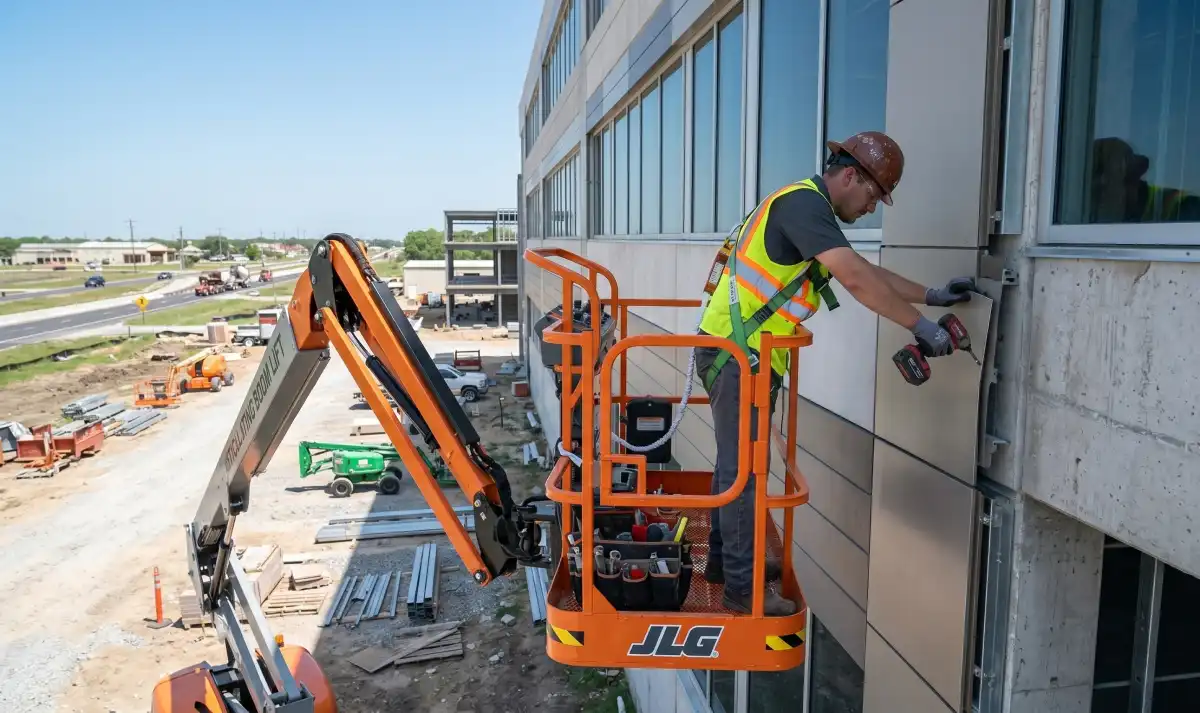
- Exterior building work, siding, and window installation
- Commercial sign installation and maintenance
- Roofing work and roof inspections
- Steel erection and commercial construction
- Bridge and infrastructure inspections
- Painting and finishing on tall commercial structures
Boom lifts are one of the most common pieces of aerial equipment that gets rented rather than purchased, and for good reason. If you’re weighing the rent vs. own decision, this overview of why renting construction equipment makes sense lays out the case clearly.
What to Know Before You Rent a Boom Lift
Three things matter before you book: the height you need to reach, the weight going into the basket, and the surface you’ll be working on.
Height is straightforward. Measure the work point and add a few feet for comfortable reach. Platform capacity determines how many workers and how much equipment can go up at once. Most single-operator jobs work with standard capacity, but two-person teams or jobs with heavy tools need a closer look at the specs.
Surface conditions matter more than most renters expect. If the ground is soft, uneven, or on a slope, mention that when you call. Rough-terrain models with four-wheel drive handle outdoor jobsites. Indoor or smooth-surface jobs use different machines. Boom lifts fall under the category of heavy equipment, and getting the right model for the conditions is just as important as getting the right height rating.
If your project also involves ground-level work, you might be looking at multiple rentals. Many jobsites that need a boom lift also need a skid steer for ground work. Here’s everything you need to know about skid steers if that applies to your project.
Boom Lift Rental in Victoria, TX
AOS Rental can help you find the right boom lift for your project. Call us and tell us the height you’re working at, what you’re doing up there, and what the ground conditions look like. We’ll match you with the right machine and get it to your site when you need it.
Frequently Asked Questions
What is a boom lift used for?
A boom lift is an aerial work platform used to raise workers and equipment to height for tasks like exterior building maintenance, sign installation, tree trimming, roofing work, and commercial construction. Unlike a scissor lift, a boom lift can extend horizontally over obstacles.
What is the difference between an articulating and telescoping boom lift?
A telescoping boom lift extends in a straight line for maximum reach and height. An articulating boom lift has jointed sections that bend to reach over or around obstacles. Articulating booms are better for tight spaces; telescoping booms are better for maximum height and horizontal reach.
Do I need a license to operate a boom lift?
OSHA requires operators to be trained and authorized to use aerial work platforms before operating one. Most rental companies can point you toward training resources. Operators must understand the machine’s controls, load limits, and safety procedures before use.