
A forklift and a telehandler both move heavy loads. That much they agree on. But put the wrong machine on your jobsite and you’ll figure out the difference fast. One is built for flat, finished surfaces and quick pallet moves. The other goes where the job actually is, whether that’s a second-story deck frame or the far corner of an uneven lot.
If you’re trying to figure out which one to rent, here’s the practical breakdown.
What a Forklift Does Best
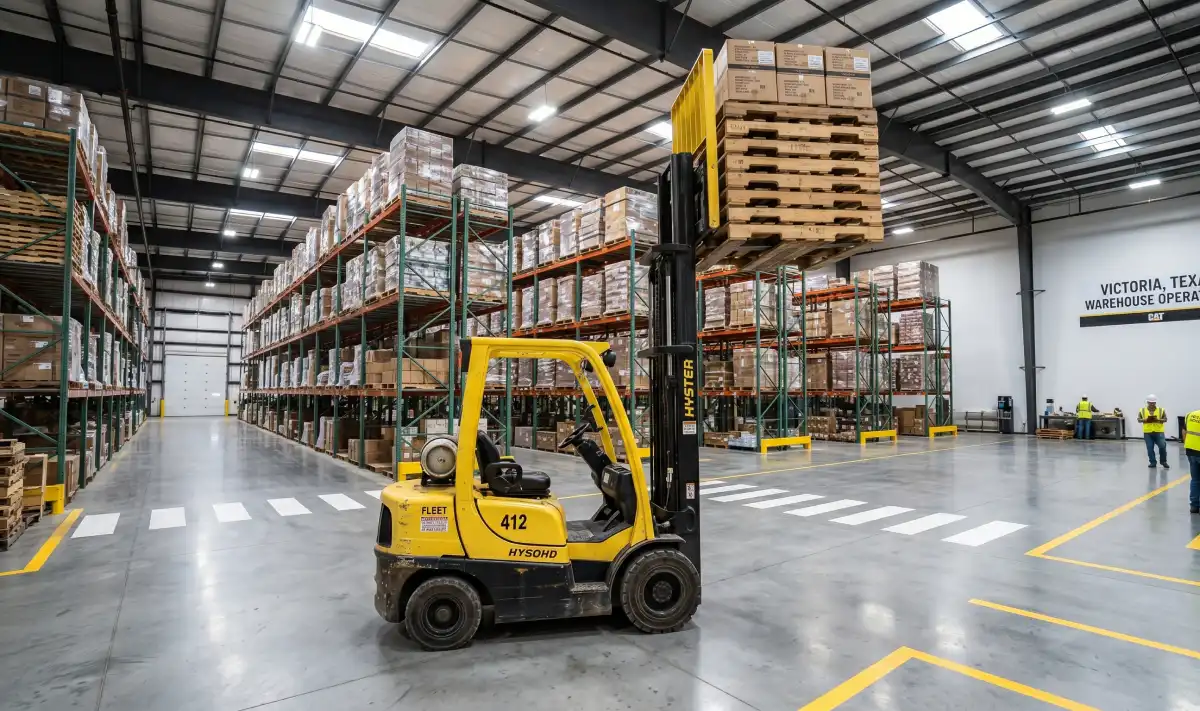
A forklift is a warehouse and loading dock machine at its core. It’s fast, maneuverable in tight spaces, and purpose-built for moving pallets on level ground. The forks go straight in, lift straight up, and the job gets done. Forklifts typically lift anywhere from 3,000 to 15,000 pounds depending on the model.
The limitation is reach. A standard forklift can’t extend its forks outward. It can only raise and lower them on a fixed mast. That’s fine if you’re unloading a flatbed or stacking materials in a warehouse. If you’re not sure whether a forklift fits your project, this breakdown of when a forklift makes sense is a good starting point. On a construction site with uneven terrain or a need to place materials on an elevated structure, a forklift hits its ceiling fast.
Where a Telehandler Earns Its Name
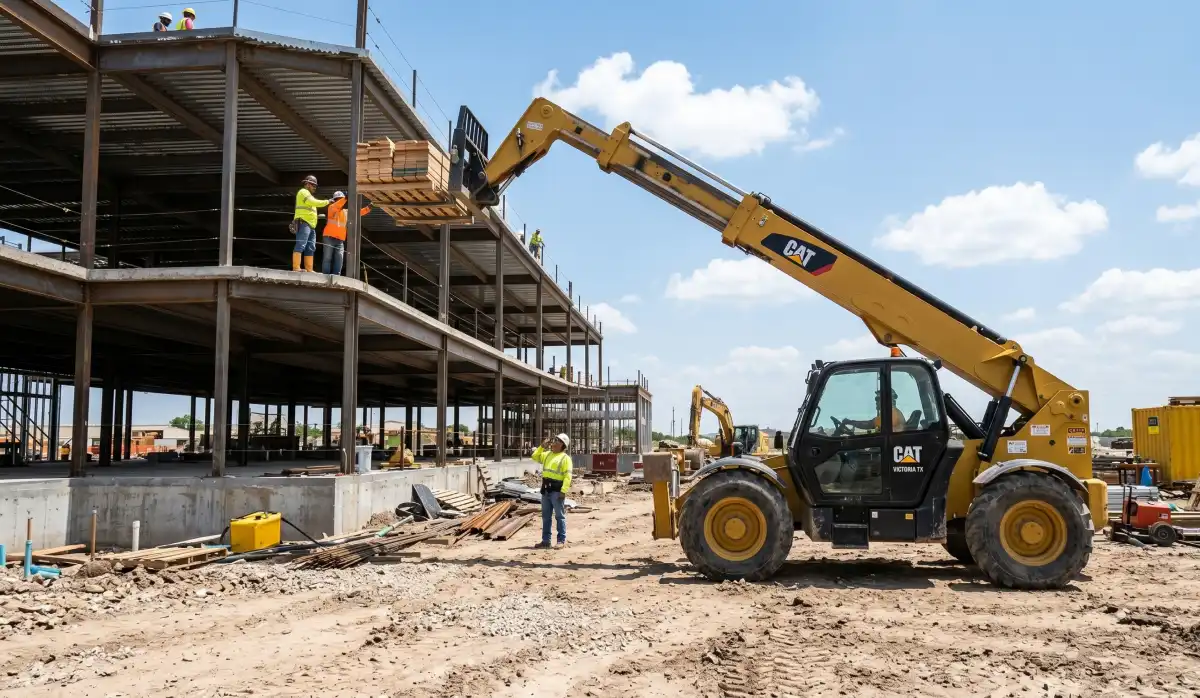
Telehandler is short for telescopic handler, and the name tells you what it does. The boom extends outward and upward, sometimes reaching 55 feet or more on larger machines. That lets you place a load over a wall, onto a rooftop, or into a spot a forklift can’t get anywhere near. If you want a full picture of how these machines work, our telehandler overview covers the details.
Telehandlers also run on rough-terrain tires and have four-wheel drive on most models. That matters on construction sites where you’re not working on a level concrete floor. Muddy ground, gravel, and slopes that would stop a warehouse forklift dead are just part of the job for a telehandler.
Reach and Terrain
Here’s the practical way to think about it. If your materials are staying on the ground and moving across a flat surface, a forklift works. If your load needs to go up, over, or through terrain that isn’t flat, a telehandler is the right call.
Most construction projects, landscaping jobs, and agricultural applications tip toward the telehandler. Warehouse operations, distribution centers, and loading dock work tip toward the forklift. There’s some overlap, but not much.
Telehandler vs. Forklift
| Feature | Telehandler | Forklift |
|---|---|---|
| Terrain | Rough terrain, off-road | Level, hard surfaces only |
| Reach | Extends outward up to 55+ ft | Fixed mast, lifts straight up |
| Max height | 30-55 ft depending on model | Typically 10-20 ft |
| Load capacity | 5,000-12,000 lbs typical | 3,000-15,000 lbs typical |
| Drive type | 4WD standard on most | 2WD or 4WD options |
| Best for | Construction, ag, outdoor | Warehouse, dock, flat jobsites |
Which One Should You Rent?
Ask yourself three questions before you call your rental company:
- Does the load need to be placed at height, over an obstacle, or at a distance from the machine?
- Will you be working on anything other than flat, hard-packed ground?
- Are you on a construction or outdoor project site rather than a warehouse or loading area?
If any of those answers are yes, you probably want a telehandler. If you’re moving palletized materials across a flat floor, staging supplies in a commercial building, or unloading a delivery truck, a forklift will do the job more efficiently and likely at a lower rental cost.
One more thing worth knowing: telehandlers can run forks, buckets, and other attachments depending on the machine, making them one of the more versatile pieces of heavy construction equipment you can rent. If your project needs the machine to do more than one thing, a telehandler with multiple attachments can replace two separate rentals.
Rent the Right Machine in Victoria, TX
AOS Rental carries both forklifts and telehandlers. If you’re not sure which machine fits your project, call us before you book. We’d rather spend five minutes on the phone making sure you get the right equipment than have you show up to a job with the wrong machine.
Frequently Asked Questions
What is the difference between a telehandler and a forklift?
A telehandler has an extendable telescoping boom that reaches outward and upward, and is built for rough terrain. A forklift has a fixed mast that raises and lowers straight up, designed for level surfaces like warehouses and loading docks.
Can a telehandler replace a forklift?
On most outdoor construction sites, yes. A telehandler can run forks and handle palletized loads in addition to its lifting and placing functions. For pure warehouse or loading dock work, a standard forklift is faster and typically less expensive to rent.
Which is better for a construction site: telehandler or forklift?
A telehandler is almost always the better choice for outdoor construction sites. It handles rough terrain, extends to height, and can reach over obstacles. A forklift is better suited to finished, flat surfaces.