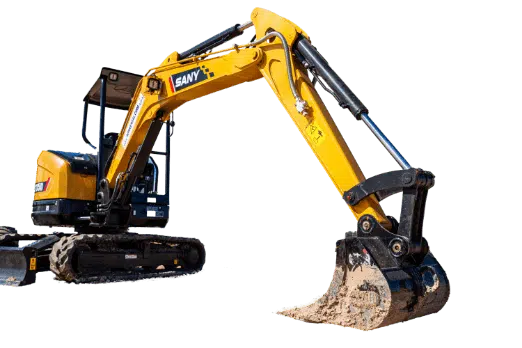



A skid steer is a compact but powerful piece of construction equipment that you’ll find in industries of all types. People often call it a skid loader or wheel loader, and it is great at digging along with many other tasks thanks to its steering system.
What is a skid steer and how does it work?
A skid steer loader is a compact heavy equipment machine that uses hydraulic lift arms to connect with many labor-saving tools and attachments. Its name comes from its unique steering system – the wheels stay fixed straight ahead without any separate steering mechanism.
Skid steers work on the principle of differential steering, which means the left and right wheel pairs move at different speeds. The operator makes turns by speeding up one side while slowing down or stopping the other side. This makes the machine drag or “skid” its wheels across the ground. The design lets the machine rotate completely within its own length by moving one set of wheels forward while the other set moves backward.
The loader’s design includes four wheels or tracks, and the front and back wheels on each side connect mechanically. Today’s models use two separate hydrostatic transmissions – one controls the left side wheels and another handles the right side.
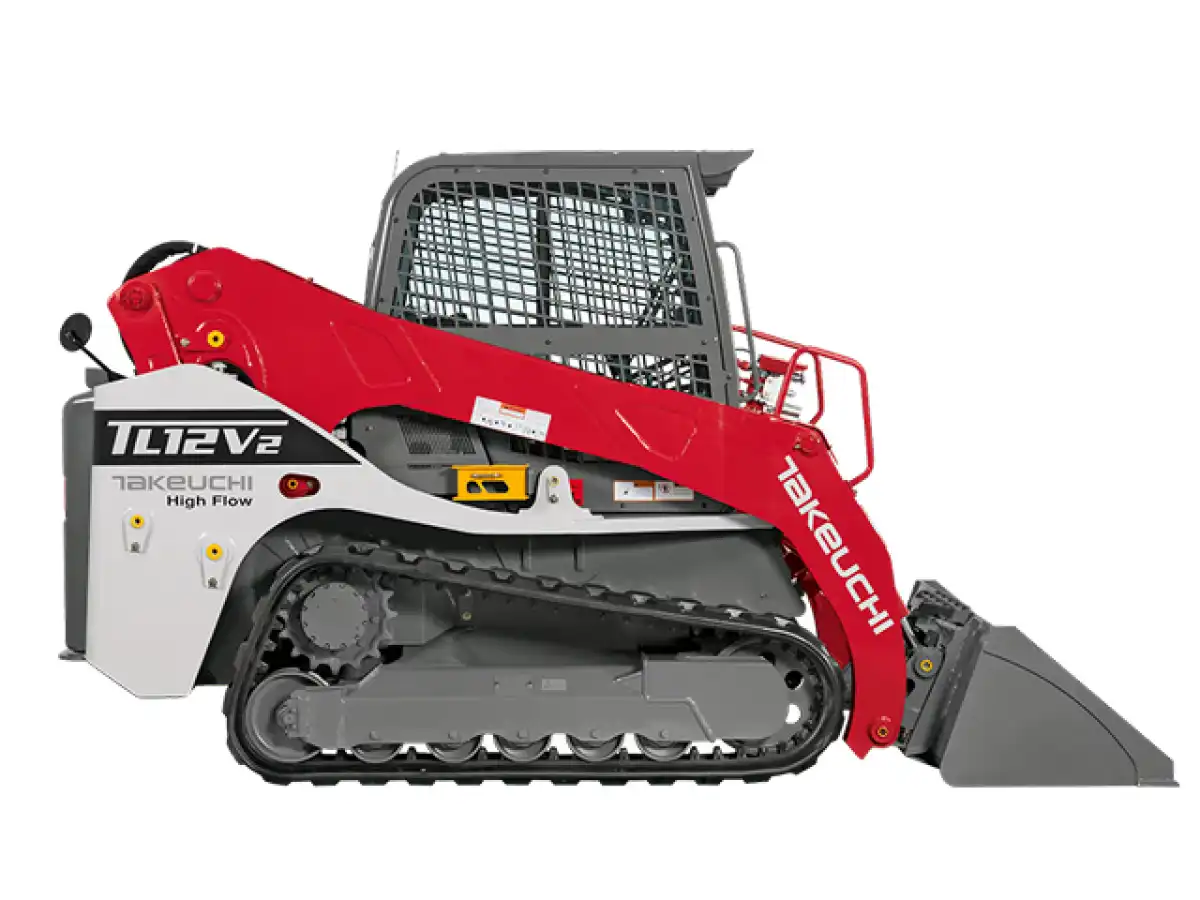
These machines offer two main configurations: units with wheels and versions with tracks (also known as compact track loaders). The wheeled models work best on hard surfaces like concrete and asphalt. The tracked versions handle uneven terrain, mud, or snow better because they provide more traction and put less pressure on the ground.
Uses of a skid steer across industries
Skid steers serve as versatile workhorses in many industries, thanks to their compact size and attachment compatibility. These machines do way beyond simple digging operations.
Construction teams rely on skid steers to handle demolition projects with precision. They break concrete and clear debris effectively. The machines excel at excavation, site preparation, and foundation work. Skid steers also create even surfaces through grading and leveling tasks that building projects need.
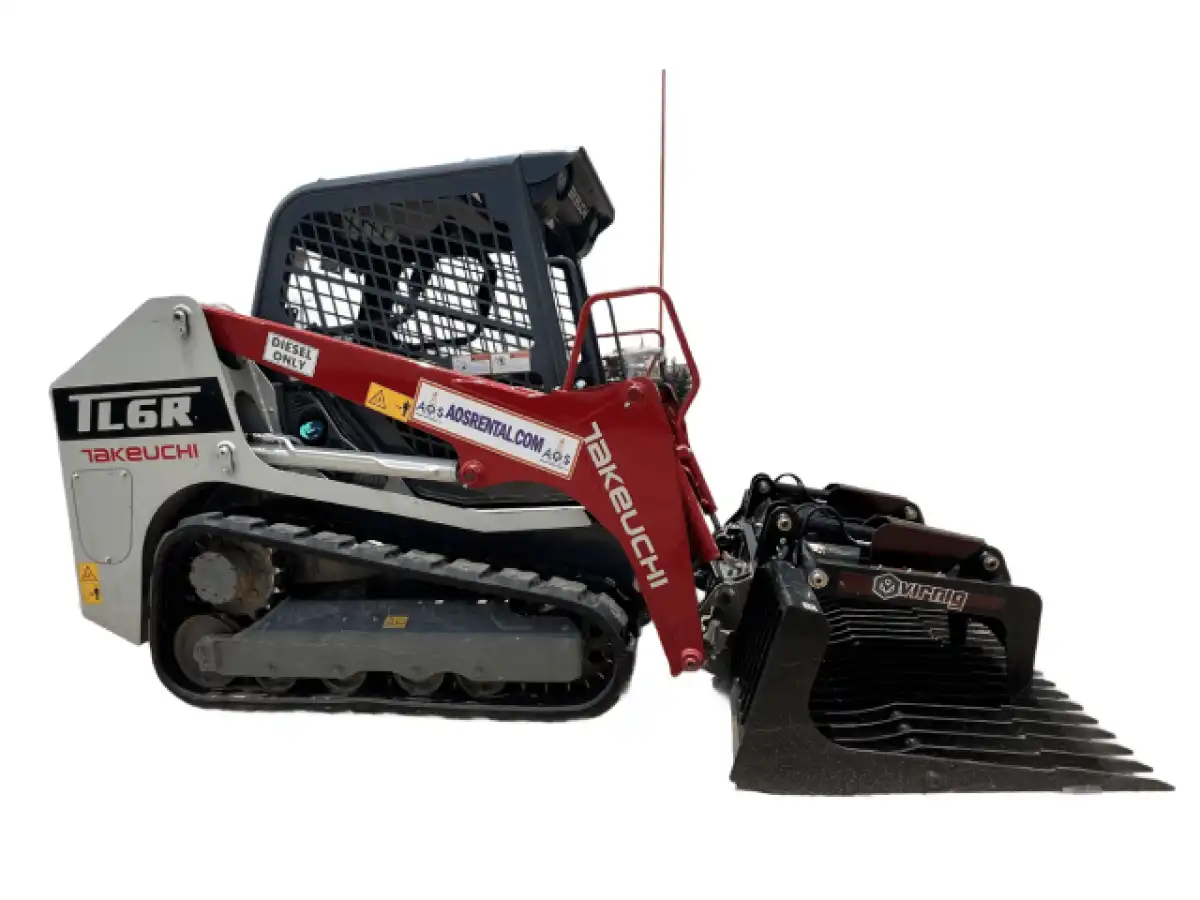
Landscapers count on skid steers to revamp outdoor spaces. The machines remove stumps, lay turf, and spread materials like mulch or gravel. Their nimble nature makes them perfect to work in tight residential spaces.
Farmers find skid steers invaluable to feed livestock, clean barns, and move feed, manure, and fertilizer. The machines’ bale spear attachments help handle hay and maintain animal housing.
Winter brings out skid steers’ role as snow management tools. These machines, fitted with snow blades, pushers, or blowers, keep driveways, sidewalks, and parking lots clear. Most skid steers’ low-flow hydraulics match with snow plows and pushers.
Municipal services and industrial facilities depend on skid steers to handle materials in warehouses. The machines’ fork attachments move pallets and transport materials quickly, making them vital to logistics operations.
Choosing the right skid steer for your project
You need to think about several important factors to pick the right skid steer that matches your project requirements.
Frame size is a vital consideration. Small-frame skid steers work best in tight spaces like residential landscapes and interior demolition. These machines have rated operating capacities (ROC) under 1,750 pounds and roughly 50 horsepower. Medium-frame models are ideal for construction and landscaping projects with ROCs between 1,750-2,200 pounds and 50-70 horsepower. Large-frame skid steers are a big deal as it means that they exceed 2,200 pounds ROC with 70+ horsepower, making them perfect for heavy excavation and large-scale demolition.
The lift path plays a role in selection. Radial lift machines are great at digging and grading because their curved trajectory gives maximum reach at mid-height. Vertical lift skid steers, on the other hand, move loads straight up and down, which provides better stability when loading trucks and lifting to higher elevations.
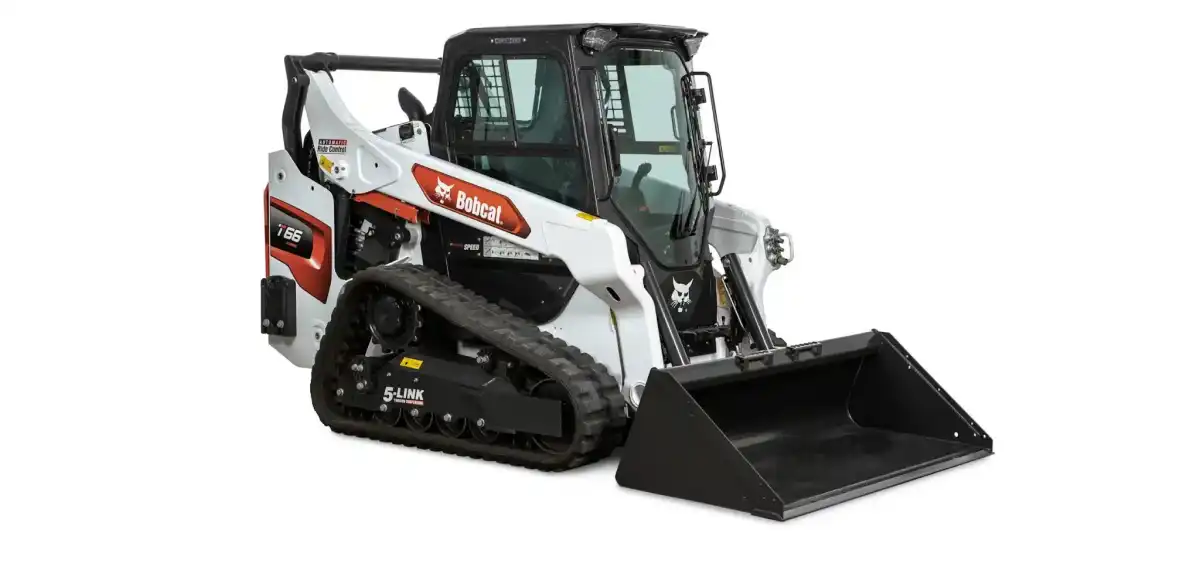
Three factors determine attachment compatibility. Connection type, hydraulic couplers, and machine lift capacity. Your machine’s ROC must exceed the combined weight of both attachment and material.
Renting makes more economic sense than buying for short-term projects.
Looking To Rent A Skid Steer?
Skid steers are without doubt among the most versatile machines used in modern construction, landscaping, and agriculture. These machines feature a special steering system and come in different frame sizes. Their maneuverability makes them perfect for large construction sites and tight spaces where regular equipment struggles. Quality rental options from services like AOS Rental let your next project benefit from these compact powerhouses’ remarkable capabilities.
Skid Steer FAQs
What is the main feature that distinguishes a skid steer from other construction equipment?
A skid steer’s unique steering mechanism, which uses fixed wheels and differential speed control, allows it to rotate within its own length, making it highly maneuverable in tight spaces.
How do skid steers vary in size and capacity?
Skid steers come in small, medium, and large frames. Small frames have under 50 horsepower and can lift up to 1,750 pounds, medium frames have 50-70 horsepower and lift 1,750-2,200 pounds, while large frames exceed 70 horsepower and can lift over 2,200 pounds.
What are some common applications for skid steers across different industries?
Skid steers are versatile machines used in construction for demolition and site preparation, in landscaping for grading and material spreading, in agriculture for handling feed and cleaning barns, and in snow removal during winter months.
How do you choose between radial and vertical lift skid steers?
Radial lift skid steers are better for digging and grading, with maximum reach at mid-height. Vertical lift models are ideal for loading trucks and lifting to higher elevations, offering greater stability for these tasks.
Is it better to rent or buy a skid steer for a project?
For short-term projects, renting a skid steer is often more cost-effective than buying. Companies like AOS Rental offer modern, well-maintained equipment, which can be a practical solution for occasional or specific project needs.